
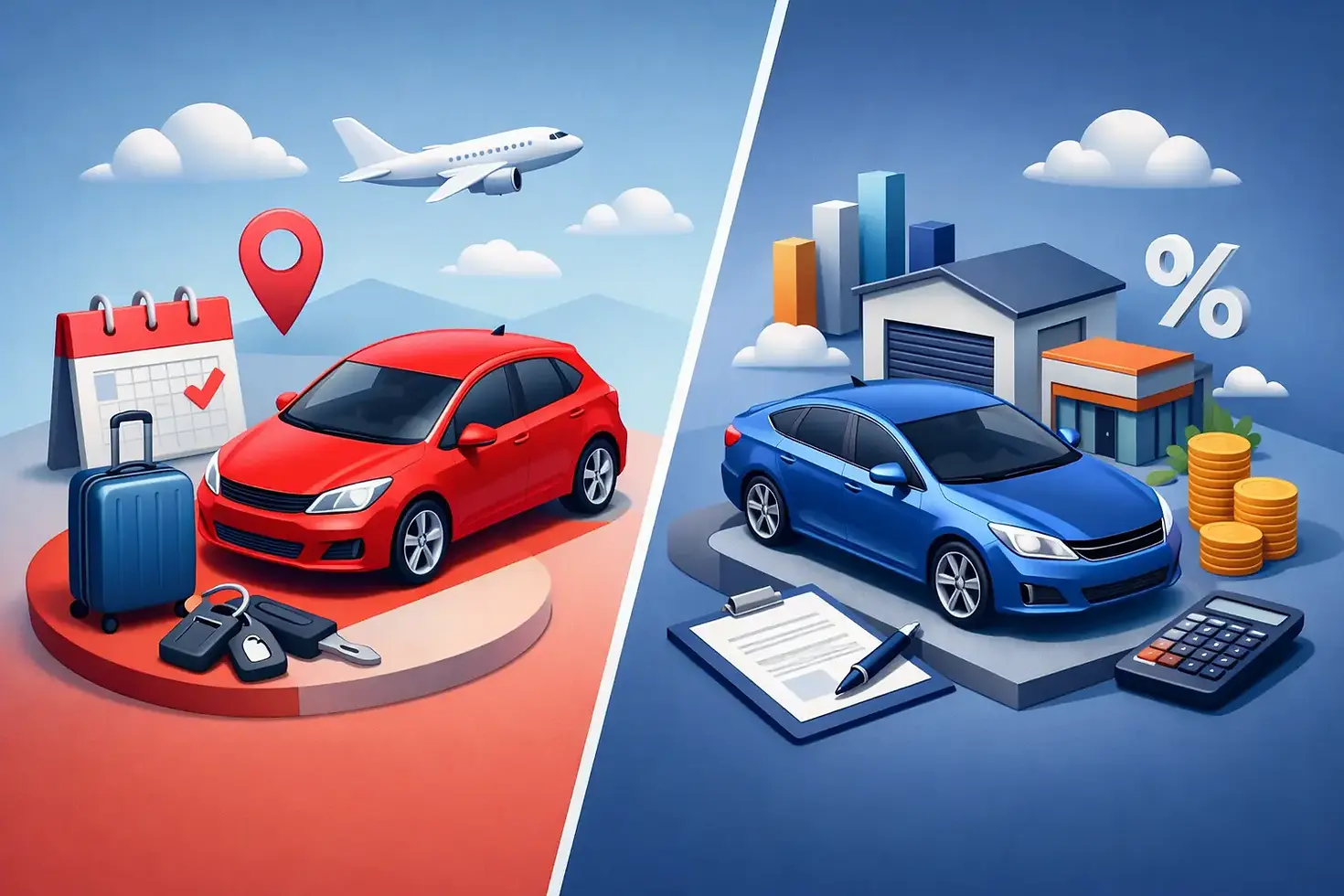
Car Hire Versus Leasing: Which Suits You?
A broken-down family car, a new work project in Brisbane or a school-holiday trip up the coast can quickly turn transport into the day’s biggest problem. When weighing up car hire versus leasing, the best choice usually comes down to one practical question: how long do you need a reliable set of wheels for?
Both options can get you moving, but they suit very different situations. Car hire gives you access to a vehicle when life changes fast. Leasing is generally a longer commitment with regular payments and conditions that need more planning. Knowing the difference helps you choose a smooth ride that fits your budget, timetable and next move.
Car hire versus leasing: the key difference
Car hire is designed for temporary vehicle access. You book a vehicle for an agreed period, which may be a few days, a week or longer depending on the arrangement. At the end of the hire period, you return it. There is no expectation that you will own the vehicle, and you can choose a car that suits the job at hand rather than the car you might need all year.
A lease is a contract to use a vehicle over a much longer fixed term, often measured in years. You make regular payments, and the agreement may include limits around kilometres, maintenance responsibilities and how the vehicle must be returned. Ending a lease early can also involve costs, so it is a choice worth making with a clear view of your future needs.
Neither option is automatically better. Hiring is about flexibility. Leasing is about longer-term predictability. The right answer depends on whether your transport need is temporary, changing or likely to stay the same for a while.
When car hire makes more sense
Car hire can be the practical answer when you need a vehicle now but do not want to take on a long contract. Perhaps your own car is in the workshop, relatives are visiting and you need extra seats, or your usual vehicle is not suitable for a particular job. A clean, comfortable and spacious hire vehicle can keep family life, work and travel plans on track.
It also works well for regional travel. If you are flying in, travelling between the Gold Coast, Brisbane, the Sunshine Coast or Northern NSW, or heading away for a few days, hiring means you are not relying on lifts, public transport timetables or putting extra kilometres on your own car.
For project-based workers, car hire can provide breathing room too. A short assignment may require dependable transport, but that does not necessarily justify years of lease payments. Choosing a fuel-efficient vehicle for the length of the project can make day-to-day travel easier to manage.
The biggest benefit is that your commitment matches your need. Once the job, trip or repair period is over, you can hand back the keys and move on.
What to check before you hire
The advertised hire rate is only one part of the picture. Before booking, ask about the hire period, included kilometres, insurance excess, bond requirements, fuel expectations, tolls and extra-driver conditions. These details vary between providers and can affect the total cost.
It is also worth choosing the vehicle for real life, not just the lowest daily price. A couple travelling light may be well served by a compact, fuel-efficient car. A family managing prams, bags and weekend sport may appreciate more room in the cabin and boot. If you will be spending plenty of time on the road, safety features, comfort and easy-to-use technology matter just as much as size.
When leasing may suit your plans
Leasing can suit drivers who need a vehicle consistently over a longer period and are comfortable committing to set repayments. You may prefer the certainty of having the same vehicle available each day for commuting, regular client visits or ongoing family responsibilities.
Some lease arrangements bundle certain running costs, while others leave more costs to the driver. The detail matters. Maintenance, registration, insurance, tyres and servicing may be handled differently depending on the lease type. A novated lease through an employer, for example, has different considerations from a private lease.
Leasing can make budgeting feel more straightforward when your work, income and driving needs are stable. However, stability is the key word. If you expect to move, change jobs, travel for an extended period or reduce your driving, a fixed agreement may feel restrictive.
Before signing, read the full contract and make sure you understand the total commitment. Look closely at kilometre allowances, end-of-term obligations, wear-and-tear rules, servicing requirements and the cost of early termination. A low-looking regular payment can tell only part of the story.
Compare the real cost, not just the weekly payment
The most useful comparison is not hire rate versus lease repayment. It is the full cost of having a suitable vehicle for the exact time you need it.
With car hire, the cost is generally concentrated into the period you use the vehicle. That can look higher week to week, but it may be better value when your need only lasts a short time. You are not paying for months or years of access after the reason for hiring has passed.
With a lease, the regular payment may look manageable over a longer term, particularly if the vehicle is used every day. But you need to account for all contract costs and the effect of changes to your circumstances. Going over agreed kilometres or ending early can change the numbers quickly.
Think about fuel as well. A fuel-efficient vehicle can reduce the everyday cost of commuting, school runs and longer motorway trips. For a temporary hire, this is still relevant, especially if you have a busy itinerary. For a lease, fuel use becomes an even bigger part of the long-term budget.
Do not confuse leasing with rent-to-own
Rent-to-own is different again. It is intended for people who want dependable vehicle access now while working towards ownership under an agreed pathway. Rather than simply returning the vehicle at the end of a hire period or lease term, the arrangement is built around the possibility of owning it once the terms have been met.
For some drivers, this can be a useful middle ground. They may need a vehicle for work and family life now, but are not ready for the upfront cost or finance structure involved in buying a car outright. As with any agreement, it pays to understand the repayment schedule, ownership conditions, maintenance expectations and what happens if circumstances change.
RC Rental offers both flexible vehicle rental and a rent-to-own pathway, giving local drivers an option that can better match where they are heading, not only where they are today.
A simple way to make the call
Start with the timeframe. If you need transport for days, weeks or an uncertain period, car hire is often the less complicated choice. It gives you a reliable vehicle without locking you into a lengthy arrangement.
If you need the same vehicle every day for a known, longer period and you are comfortable with the contract conditions, leasing may be worth considering. Take the time to compare the whole agreement rather than deciding on the repayment alone.
Then consider the vehicle itself. Will it carry the people and gear you need? Is it comfortable enough for regular driving? Does it offer the safety features and fuel efficiency that make each trip easier? The best arrangement still needs to put you in the right car.
A good transport decision should make your week run better, whether that means getting the kids to school, arriving at work on time or setting off for a coastal break with room for everyone. Choose the option that gives you confidence for the road ahead, without committing beyond what your life actually requires.


Comments